DPWI BUDGET VOTE FOCUSES ON REFORM, INFRASTRUCTURE DELIVERY AND ECONOMIC GROWTH
Article by Nolwazi Ndhlovu, Pictures by Caroline Mokotedi
12 May 2026
Leadership of the Department of Public Works and Infrastructure (DPWI) has reasserted its commitment to reforming the Department, strengthening infrastructure delivery and unlocking economic opportunities through public assets during the tabling of Budget Vote 13 in Parliament on Wednesday, 13 May 2026.
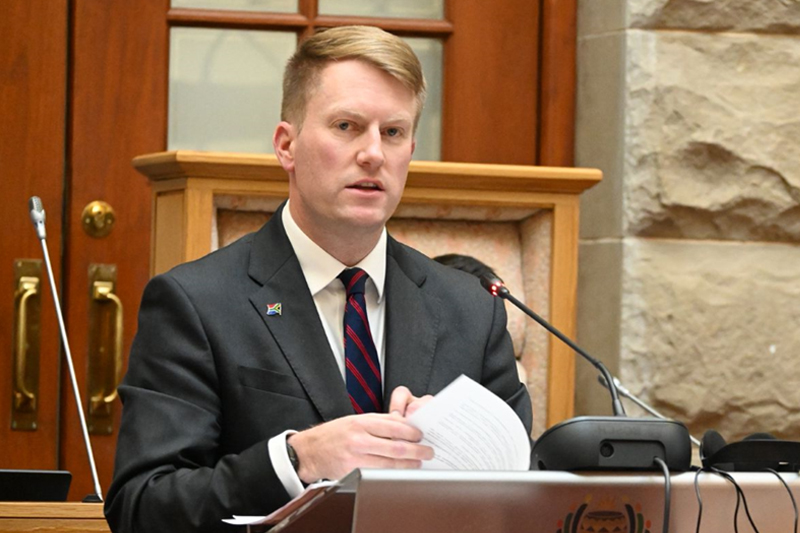
Public Works and Infrastructure Minister Dean Macpherson tabled the Department’s R7.8 billion budget allocation for the 2026/27 financial year, while Deputy Minister Sihle Zikalala emphasised government’s continued focus on transformation, contractor development and inclusive economic participation within the built environment sector.
The budget forms part of a medium-term allocation of R24.6 billion, with approximately R6.4 billion directed towards transfers and subsidies, including funding for public entities and conditional grants for the Expanded Public Works Programme (EPWP).
In his address, Minister Macpherson said the Department’s focus remains on reforming governance systems, protecting public funds and positioning Public Works and Infrastructure as an economic delivery unit capable of driving investment and development.
The Minister spoke on the progress made through Infrastructure South Africa, including the unlocking of approximately R17 billion in investment linked to a large-scale bioethanol production facility. He also confirmed that legislation formalising Infrastructure South Africa will soon be gazetted for public comment. Several infrastructure delivery milestones were also highlighted, including progress on the new Johannesburg Deeds Office and the completion of the Durban Forensic Science Laboratory for the South African Police Service. The Minister said the Department’s Strategic and Special Delivery Unit has focused on unblocking stalled projects that had faced years of delays.
The recovery of the Independent Development Trust (IDT) also featured prominently during the debate. Minister Macpherson noted that the entity had grown its confirmed project order book to R6 billion and exceeded its infrastructure delivery targets during the previous financial year.
Deputy Minister Zikalala emphasised the importance of infrastructure-led growth and transformation within the construction and built environment sectors. He said the Department is intensifying efforts to support emerging contractors, women and youth-owned enterprises through programmes led by the Construction Industry Development Board (CIDB). Among the initiatives announced was the allocation of R100 million through the CIDB B.U.I.L.D Fund to support developing enterprises, alongside targeted training and competence assessments for emerging contractors. The Department also plans to assess 1 000 contractors and provide construction management training and certification to 200 contractors to improve sustainability and participation in infrastructure projects.
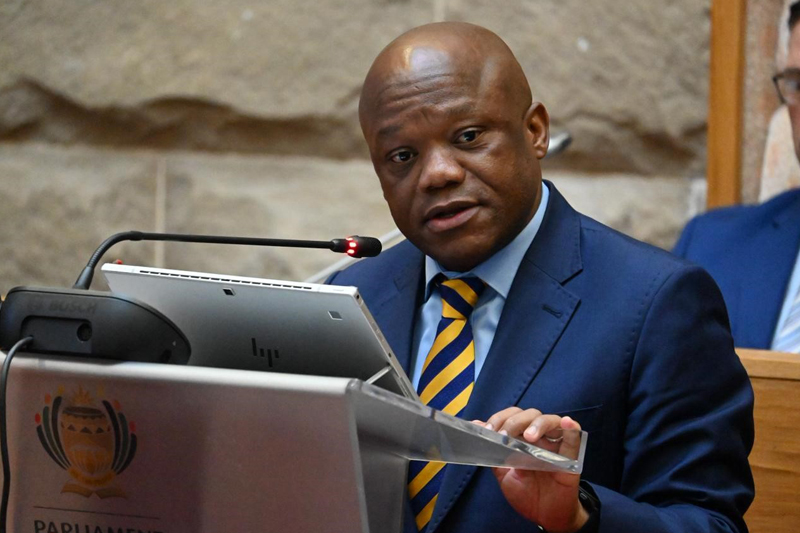
The Deputy Minister further spoke on the ongoing work by the Council for the Built Environment to professionalise the sector and improve the participation of black professionals and women in the built environment.
A major focus of both principals’ speeches was the reform of the EPWP. Minister Macpherson outlined the recently launched Working on Infrastructure pilot programme, aimed at addressing political gatekeeping, unfair recruitment practices and abuse within the programme. The pilot seeks to provide participants with structured work opportunities, skills development and pathways into permanent employment.
Deputy Minister Zikalala added that the Department continues to prioritise timely payments to service providers through the Reapatala programme, which tracks approximately 12 000 invoices monthly. Since April 2024, the Department has reportedly tracked over 167 000 invoices valued at R19.9 billion, maintaining a 99% payment rate within 30 days.
On governance and accountability, Minister Macpherson warned that reforms within the Department are being met with organised resistance, particularly within the Property Management Trading Entity (PMTE). He cited concerns relating to inflated leases, underutilised state properties, ghost employees and resistance to oversight measures such as lifestyle audits. The Minister revealed that ongoing audits have identified 60 possible ghost employees who allegedly received salaries while not employed by the Department. He also highlighted concerns raised by the Auditor-General regarding the underutilisation of Telkom Towers and other state-owned buildings while government continues spending billions on private leases.
Deputy Minister Zikalala also touched on renewed focus on the implementation of Operation Bring Back, a programme aimed at recovering illegally occupied and unlawfully transferred state properties. The Department is currently investigating 1 287 state properties identified through previous forensic investigations.
Looking ahead, Minister Macpherson announced three strategic priorities for the year ahead: the establishment of the South African National Property Company, further reform of the EPWP through Working on Infrastructure, and the revitalisation of small harbours to stimulate economic growth in coastal communities.